In going through cases we have with some customers, we’ve seen a few instances where Internet Explorer does not cache shared static resources. Within Load Tester, this problem becomes immediately apparent:
Note that the shared CSS, Javascript, and images are re-requested again on the About page and every other recorded page that uses them. Note also, these files don’t come back with a 304 (Not Modified), but instead the full content of the file is sent over and over again through a HTTP 200. Normally, the browser should load these files once, and not need to request them again within the … Continue reading »
Customers occasionally ask us “How early should we begin load testing?”
The answer is to test something, anything, as soon as the architecture is available. Performance problems have a wide variety of causes – from a single line of code to a load balancer setup; from a database schema to a server config file. Early in the development of the software you can catch simple coding problems and fundamental architectural limitations that are much easier to fix before a lot of code has been written.
Now, a word of caution: Testing against a scaled-down development or … Continue reading »
Performance starts with the developers as well as the server and network administrators. High-capacity websites do not happen by accident. To perform well and scale big, the system must be designed, built and configured for performance. That means it must be coded and configured with performance in mind, right from the start. Make sure the developer and admins all understand the levels to which the system must perform. Don’t make them guess what “it has to be fast” means.
Two of the most important tasks the test and project management teams to can do to help:
Identify the performance goals for the … Continue reading »
Following closely on the heels of the previous release, the 4.3 release focuses on network compatibility and testcase configuration improvements based on feedback from customers and from our services work in the past year with such clients as the US Census and the New York Marathon.
JSON and custom parsers
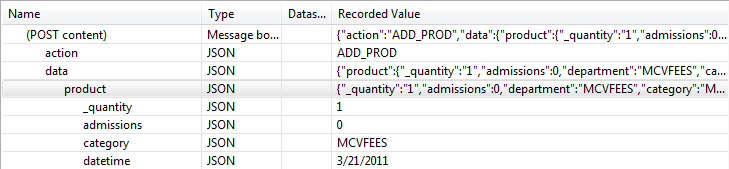
JSON support – Load Tester now understands the JSON data format which is popular in AJAX apps. A new parser allows the fields view to display the fields within JSON data structures and new detection rules will automatically configure many JSON-related fields.
Parser customization: Load tester now allows selection of which parser to … Continue reading »
Load Tester 4.3 carries a number of improvements for both ease of configuration, and accuracy of test simulation. Among these improvements comes support for speculative authentication, allowing Load Tester to simulate behavior from IE 9. The speculative authentication is only used for HTTP authentication schemes used by Load Tester’s Connection Negotiation Authentication feature. More information about HTTP authentication is available under How HTTP Authentication works and why load testers should care.
To describe the speculative authentication feature, it is easiest to simply look at a testcase using Basic Authentication.
Continue reading »
Sometimes while recording a testcase, you might capture URLs (like google analytics and certain 3rd party content) that you do not necessarily want to load test. In previous versions of Load Tester, removing any unwanted URLs required selecting the unwanted link and deleting each link individually. Removing the links could be cumbersome and time consuming especially if the unwanted URLs were repeated multiple times on different pages. With the 4.2 release of Load Tester, the Mass Delete function can now be used to delete multiple URLs with the same domain name at the same time.
Note: Recording unwanted URLs can be … Continue reading »
There’s no doubt that generating load from anyplace in the world at just the push of a button is one of the cloud’s killer applications. Since we first released the ability to generate load from the cloud back in late 2009 people have logged over 33,000 hours of remote load testing from the cloud. And not a crippled cheapo service, either, but full blown, enterprise quality testing with expert technical support backed by a professional services team.
I still get a kick out of running load tests from the cloud, specifically watching Amazon’s EC2 spin up dozens of computers and … Continue reading »
Because we usually talk about latency in tiny numbers (e.g. 20 milleseconds of latency) it is easy to overlook just how big an effect latency can have on the effective bandwidth between geographically distant locations. While running some recent tests to measure the available bandwidth from our cloud engines, I accidentally ran a test between a load engine and a server that were more than 2600 miles apart. Knowing that our server and engine should have both delivered better results, it took me a few minutes to realize that one mistaken click (where to start the load engine) had … Continue reading »
Over the last year, Web Performance engineers have been working to make Load Tester smarter and easier to configure. Load Tester 4.2 introduced the new Fields View, which allows test case developers to write out HTTP requests using a flexible and composable assortment of data sources.
Starting with Load Tester 4.3, Load Tester will automatically recognize JSON content in any HTTP request. As a consequence, each JSON element will become a configurable name-value pair field in the Fields View. We believe this will make it much easier to configure complex AJAX and RESTful style test cases.
Furthermore, whenever Load Tester’s Application … Continue reading »
Now if you have even a single server monitoring license you can monitor an unlimited number of servers at no extra charge! The Server Monitoring modules are add-ons for Load Tester that add the ability to monitor a couple dozen different parameters from the Windows or Linux operating systems or the .NET application server. Previously they were licensed on a per-server basis, which meant a license had to be issued for each server, and customers who purchased a bunch had the hassle of managing a handful of licenses, each of which had to be installed and updated.
In … Continue reading »
Occasional load-testing tips, performance-engineering notes, and product updates. No spam — unsubscribe anytime.